- FlockAware
- News
- ACLU and EFF ask Wisconsin Supreme Court to require warrants for plate reader searches
ACLU and EFF ask Wisconsin Supreme Court to require warrants for plate reader searches
The ACLU of Wisconsin and EFF petitioned the Wisconsin Supreme Court on October 14 to rule that police need a warrant to search stored plate reader data in Milwaukee, Racine, Kenosha and Green Bay.
What does the petition ask?
EFF and the ACLU of Wisconsin asked the court to rule that the state constitution requires a warrant for retrospective searches of plate reader databases used by police in Milwaukee, Racine, Kenosha and Green Bay. They represent the Wisconsin Council of Churches and a Green Bay pastor (EFF).
The group asked the Supreme Court to take the case directly. WPR reported the four cities had not commented (WPR).
What is the legal argument?
The suit argues that searching the data without a warrant violates the Wisconsin Constitution's ban on unreasonable searches, which is nearly identical to the Fourth Amendment (WPR).
ACLU attorney Wes Haslam said people expect privacy when driving to places of worship, which host 12-step recovery programs, domestic violence support and political gatherings (WPR).
Would it ban the cameras?
No. Haslam said the suit does not seek to outlaw the cameras; it argues police need a judge's warrant to access a driver's location history, or must show emergency circumstances (WPR).
How does it connect to other cases?
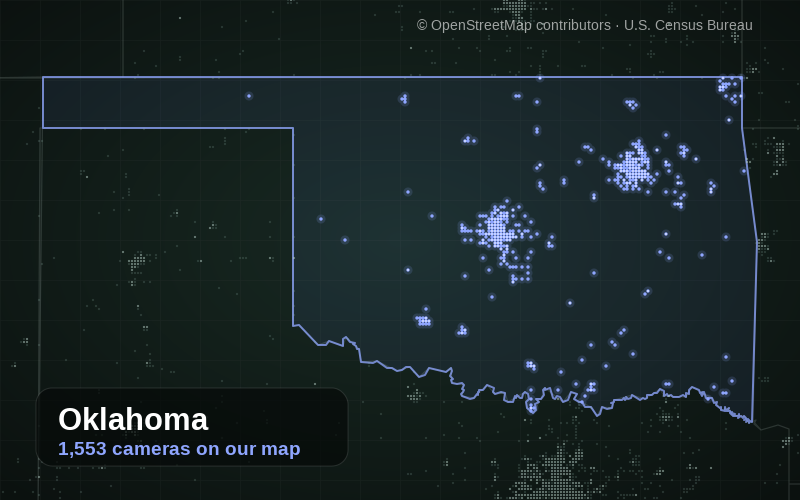
EFF called it its second lawsuit challenging warrantless plate reader searches, after SIREN v. San Jose, and pointed to the Oklahoma federal ruling earlier that month (EFF); see the Oklahoma ruling.
WPR noted the Wisconsin Institute for Law and Liberty made similar arguments in a Waukesha County suit filed in September (WPR); see the Waukesha lawsuit.
What this means for drivers
The petition does not seek to take cameras down. The question is whether police must get a warrant before searching where a car has been (WPR).
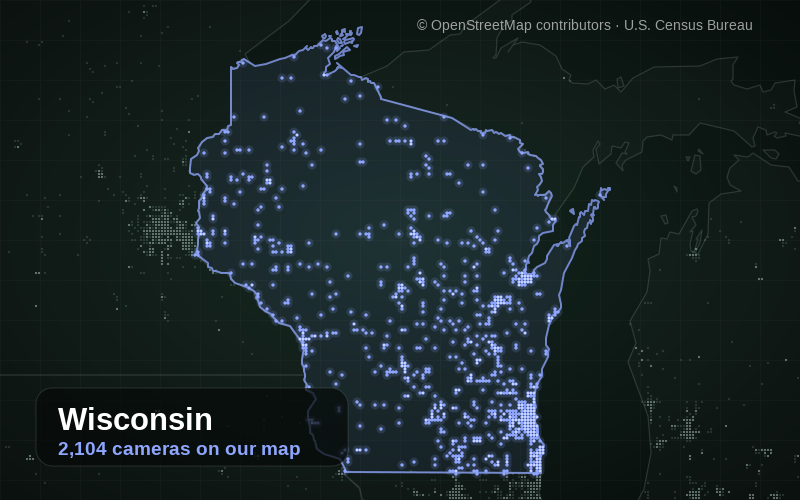
Mapped cameras in Wisconsin
See where plate readers are mapped across Wisconsin, then open any city for a closer look.