- FlockAware
- News
- Federal judge rules a warrantless Flock search in Oklahoma unconstitutional
Federal judge rules a warrantless Flock search in Oklahoma unconstitutional
U.S. District Judge Sara Hill ruled on October 1 that a Tulsa County deputy's warrantless search of a driver's month of plate reader history violated the Fourth Amendment, and suppressed the evidence.
What did the judge decide?
On Thursday, October 1, Judge Sara E. Hill granted Melisa Susan Kyle's motion to suppress evidence in a drug case, finding that a Tulsa County deputy's search of her plate through Flock and VehicleManager was an unconstitutional search (CBS12 via WJLA).
404 Media described it as one of the first times a federal judge has decided Flock searches can be unconstitutional (404 Media).
What happened in the case?
In May, Deputy Freddie Alaniz saw an SUV with a California plate on an Oklahoma highway, followed it and ran the plate in Flock, then stopped it for a lane change without a signal. He used the driver's travel history from the system as part of his reason to search the car, where he found 91 pounds of methamphetamine (404 Media).
The judge wrote that the search returned more than 50 records of the driver's whereabouts across the country over a month, and that all evidence from the search must be thrown out (404 Media).
Why does it matter?
Hill wrote that a network collecting information on every passing vehicle and serving it to police on demand is a form of indiscriminate mass surveillance (TechCrunch). She distinguished the 1983 Knotts decision that earlier rulings relied on, saying it involved far less sophisticated technology (404 Media).
The decision drew on Supreme Court rulings about cellphone location data, including Carpenter and this year's Chatrie, and said people can keep a reasonable expectation of privacy in the whole of their physical movements (CBS12 via WJLA).
What are its limits?
The ruling is not binding precedent (TechCrunch). It does not bar every plate reader or say a single scan is unconstitutional; it focused on a monthlong, multistate history search. A federal judge in Virginia upheld Norfolk's system in January (CBS12 via WJLA).
A Flock spokesperson said the company was not a party, that the ruling goes against the weight of authority, and that it expects the decision to be appealed and overturned (404 Media).
What this means for drivers
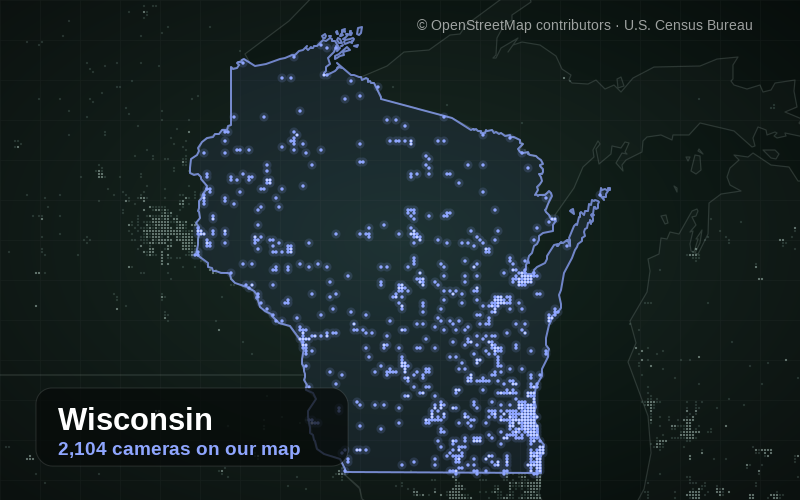
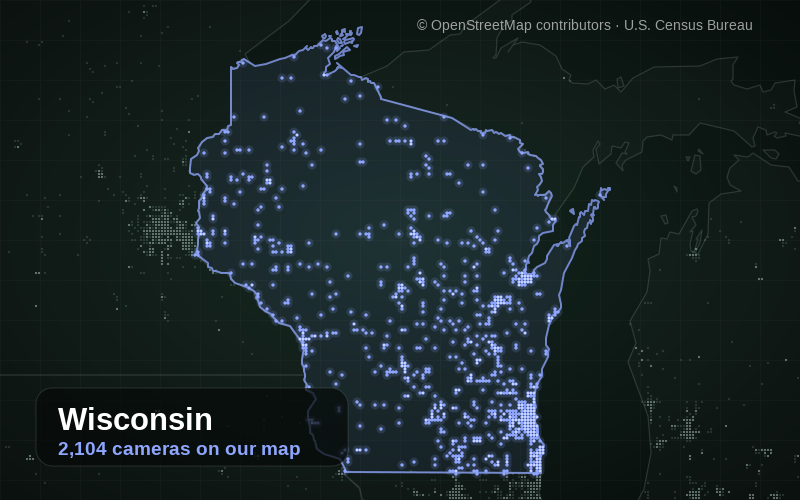
Nothing changes on the road: the cameras keep reading plates. The ruling is about when police need a warrant to search the stored history, and for now it applies only to this case (CBS12 via WJLA). Two Wisconsin cases ask courts to require warrants more broadly (EFF); see the Wisconsin petition.
Mapped cameras in Oklahoma
See where plate readers are mapped across Oklahoma, then open any city for a closer look.
Sources
- 404 Media: Federal judge rules a Flock search was 'indiscriminate mass surveillance'
- TechCrunch: Federal judge calls Flock 'indiscriminate mass surveillance' (Oct 3, 2026)
- CBS12 via WJLA: Federal judge rules warrantless license-plate reader search violated Fourth Amendment
- EFF: We're asking the Wisconsin Supreme Court to end warrantless ALPR searches (Oct 14, 2026)